Hungry City in Arabic!

Posted by Carolyn on April 17, 2012 at 4:52 pm

hc-arabic.jpg

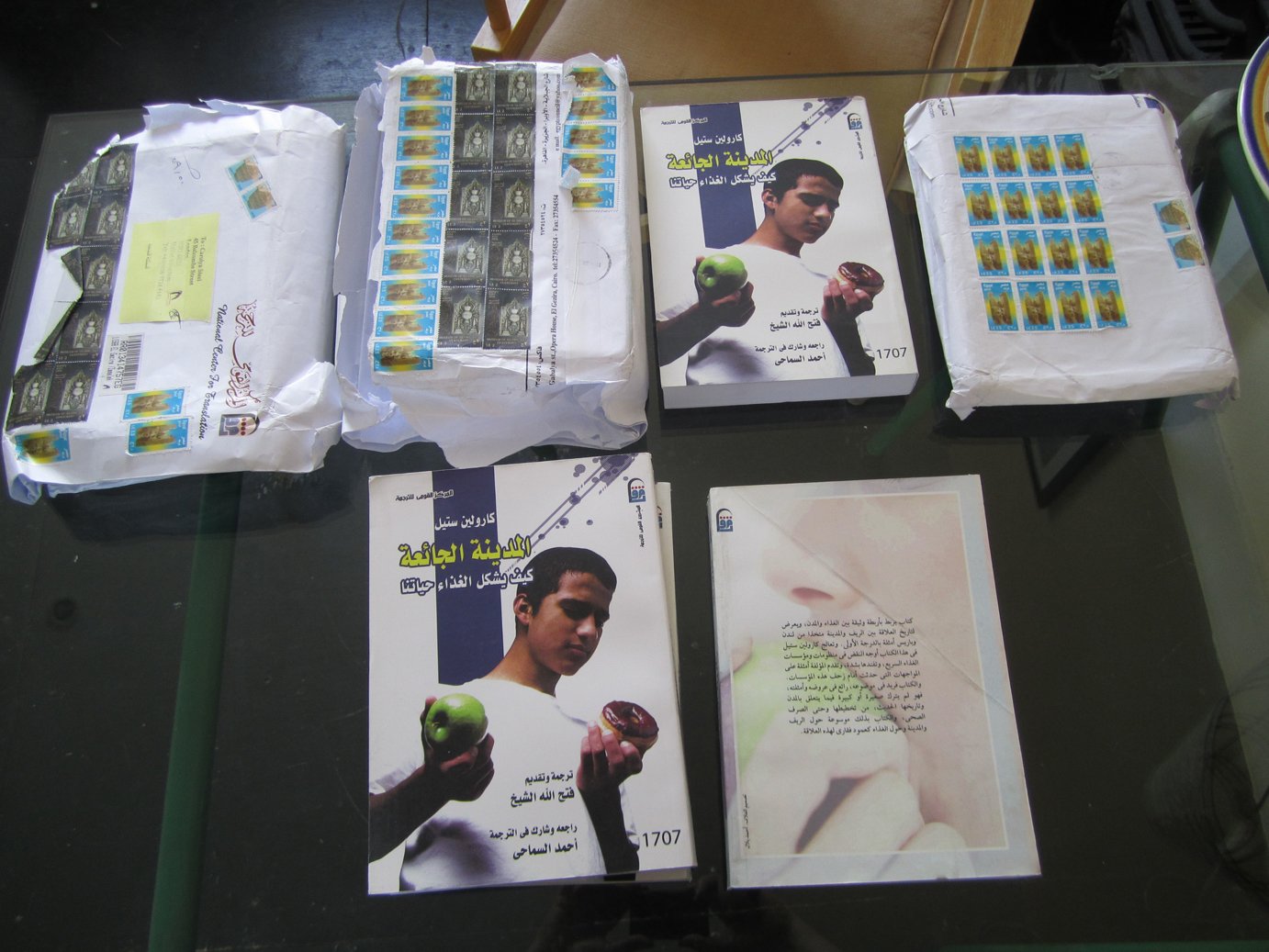
I am delighted to announce that Hungry City is now available in Arabic. The packages above arrived today from Cairo, with their impressive array of stamps. I look forward to hearing what Arabic-speaking readers think of it!


FoodShare, Toronto

Posted by Carolyn on January 13, 2012 at 10:56 pm

debbie-field.JPG

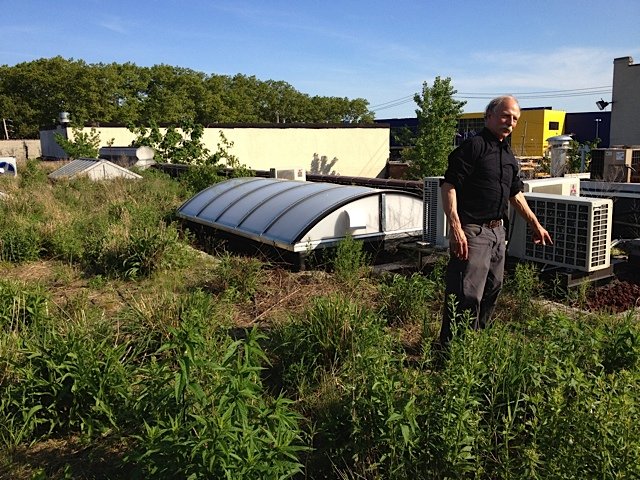
Toronto, as I mentioned in my previous post, is something of a hotspot for students of food urbanism. Of many inspiring projects I visited or heard about on my recent trip there, FoodShare stands out. Founded as a food bank in 1985 by then Mayor of Toronto, Art Eggleton, FoodShare has grown into Canada’s largest community food security organization, reaching over 145,000 children and adults a month. An extraordinary amalgam of people and projects, ideas and initiatives for which the mot de jour description food hub is entirely inadequate, it comprises, inter alia, a ‘Good Food Box’ non-profit community box scheme, collective kitchen and community garden, FoodLink Hotline, educational programmes by the dozen, and a powerful advocacy role in community and city politics.

Debbie Field, pictured with a checklist at the top of this post, is the organisation’s dynamic and much-lauded director. She describes its remit thus:

‘FoodShare Toronto is a non-profit community organization whose vision is Good Healthy Food for All. 
We take a multifaceted, innovative, and long-term approach to hunger and food issues. At FoodShare we work on food issues “from field to table” – meaning that we focus on the entire system that puts food on our tables: from the growing, processing and distribution of food to its purchasing, cooking and consumption. 

We operate innovative grassroots projects that promote healthy eating, teach food preparation and cultivation, develop community capacity and create non-market-based forms of food distribution.
 Public education on food security issues is a big part of our mandate: we create and distribute resources, organize training workshops and facilitate networks and coalitions. 
We believe that food is vital to the health of individuals and communities, and that access to good, healthy food is a basic human right’.

You can’t say fairer than that. What I love about FoodShare is the breadth of its vision. I know of many innovative projects dealing with hunger, food waste, growing schemes, community health and educational programmes, and many more inspirational groups and individuals working tirelessly to influence food policy, but to find all these things in one place is rare indeed. It’s a model that can inspire us all.

To find out more about FoodShare, click here


Toronto Food Policy Council

Posted by Carolyn on November 30, 2011 at 12:34 pm

toronto-food-coucil.jpg

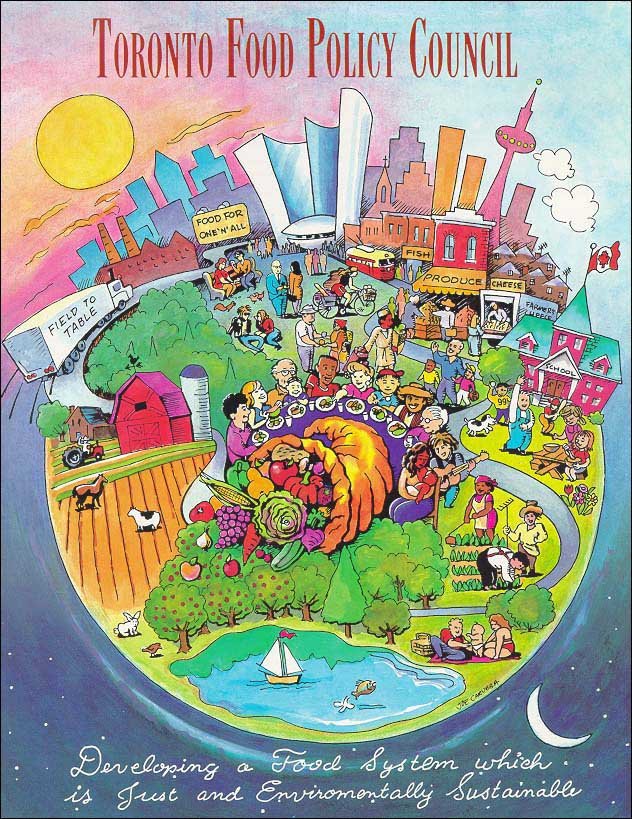
I was delighted recently to be invited to speak at ‘Together at the Table’, the Toronto Food Policy Council’s 20th anniversary celebration. For anyone interested in food and cities, Toronto is something of a lodestar, since its much-emulated Food Policy Council (FPC), a community organisation embedded in the city’s Board of Health with the remit to advise the city on food policy matters, was the first of its kind.

The event, held in the city’s magnificent St. Lawrence Hall, was both inspirational and educational. A succession of speakers told of the FPC’s early formation (inspired by a visit to Tim Lang and the London Food Commission), of how its unique position had allowed it to transcend the boundaries between community activism and local government, how a single issue (the fight against bovine growth hormone) had raised matters of national and global importance, and how, above all, food can connect ideas and people.

I have rarely heard a more inspiring and insightful series of speakers, or learned more in a single day about the transformative power of food. I could – and indeed shall – write more about it, but for now, I can heartily recommend the many ground-breaking reports by founder-members and former co-ordinators including Rod MacRae, Brewster Kneen and Wayne Roberts, available on the FPC’s website:

Toronto Food Policy Council


This is Rubbish

Posted by Carolyn on October 22, 2011 at 5:47 pm

I have recently become a mentor of This is Rubbish, a great community interest company working to reduce food waste in the UK. On Saturday 5th November, they are organising an day-long conference in collaboration with the Centre for Alternative Technology called Forum and Feast, which will take place at Machnylleth in Wales. You can find out more about it, and TiR, here:

This is Rubbish website


Singapore

Posted by Carolyn on October 8, 2011 at 12:25 pm

img_1533.JPG

I have just been to Singapore to speak at the Making Future Cities symposium, an initiative of the Singapore-ETH Centre for Global Environmental Sustainability (SEC). The programme, which is just getting underway, has nine different research strands, each of which is looking at the future of cities from a different perspective, and a food strand is due to start next year.

Singapore is jaw-dropping – the sort of place that permanently shifts the landscape of your mind. With a population of 5 million and a land area just one third the size of Greater London, it is understandably obsessed with food security; a problem at which the government is prepared to throw more or less unlimited amounts of cash, which luckily flows in faster than it flows out, thanks to Singapore having the largest container port in the world and the fourth largest banking centre.

The result, as Rem Koolhaas discussed in his famous essay in SMLXL, is that the island of Singapore has been radically reshaped since independence. The land area has been increased by 20 percent, by piling offshore and shaving the tops off hills to create infill material; sand from Indonesia is now used instead. In order to conserve water, all the island’s rivers have been dammed up so that none now reaches the sea, and plans are afoot to spend $4.5 billion hollowing out the island’s centre (made of granite) to create a vast underwater cistern. Most of the pre-independence building fabric has been demolished to make way for ‘HDBs’, blocks of flats built by the government Housing Development Board, in which 87 percent of the population now lives.

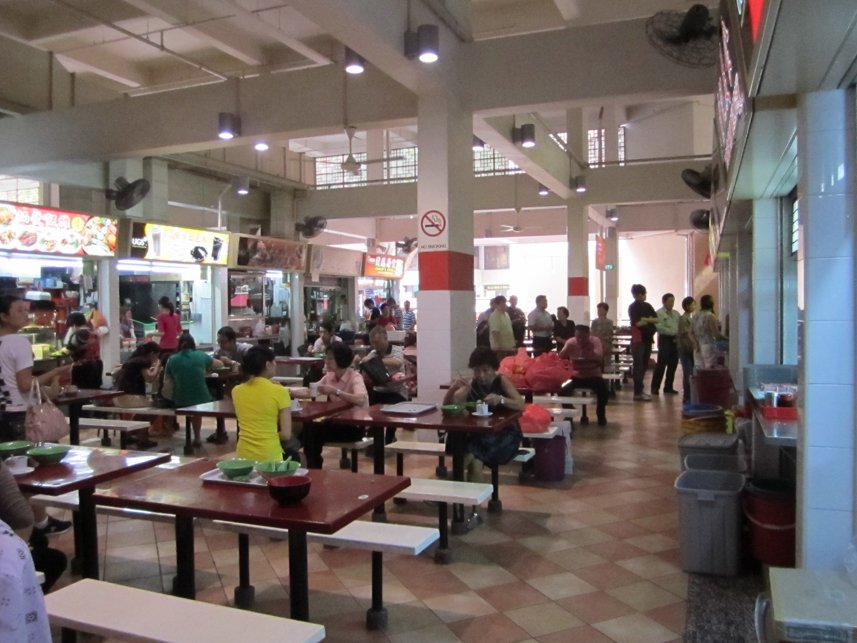
With a year-round climate of around 30ºC heat and 80% humidity, Singapore feels a bit like a giant inside-out Turkish Bath with spicy food. Of course most of the latter is imported – 95 percent of it – but the cuisine is famously delicious, an intense fusion of some of the yummiest cuisines in the world, much of it served in outdoor ‘Hawker Centres’, or open food courts, where one can choose from a dazzling array of small, family run kitchens:

img_1516.JPG

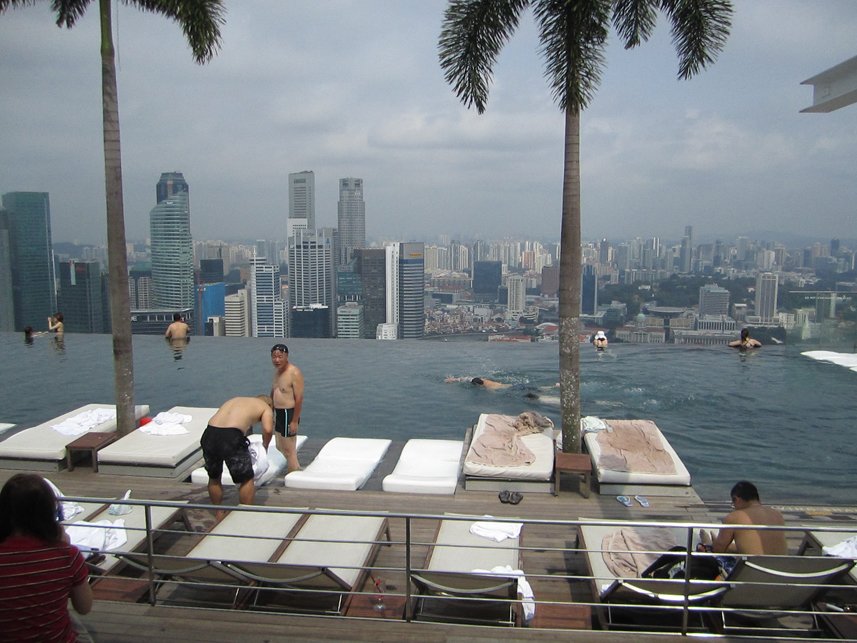
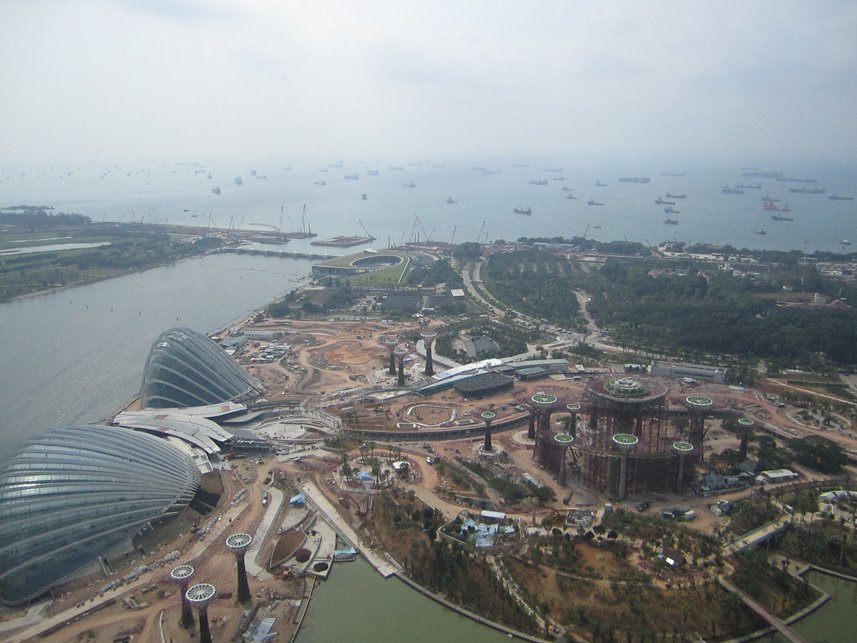
The craziness of Singapore can be viewed at leisure from the roof of Sky Park, a new 57-storey luxury development on the edge of the city’s marina. From an improbably vegetated ship-like deck full of bamboo and palm trees, one can gaze across an equally improbable infinity pool at a panorama of the city (the image at the top), or, in the other direction, across a vista of newly created parkland to a sea peppered with anchored supertankers waiting to enter port:

img_1519.JPG

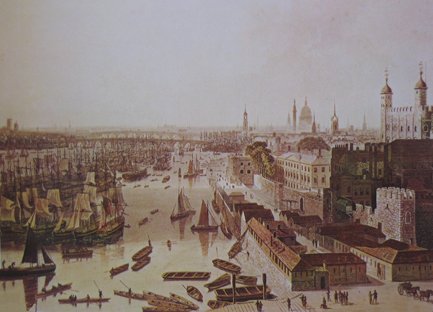
The sight reminded me of a favourite image of London’s ‘Legal Quays’ in 1802, then itself the largest sea-port in the world, for access to which ships then had to queue for up to two months:

legal-quays-small.jpg

Plus ça change, plus c’est la même chose.

To find out more about Making Future Cities, click here


Melbourne State of Design Festival

Posted by Carolyn on September 8, 2011 at 3:23 pm

5975768913_db246f5e52.jpg

As I mentioned in my previous post, I was fascinated to discover that the sitopian origins of Sydney and Melbourne bear a striking resemblance to ancient city-founding rituals, such as the Etruscan one you can see me discussing here, during my keynote address at the Melbourne State of Design Festival. If you like, you can watch my whole lecture here:

Melbourne State of Design Lecture


Australia

Posted by Carolyn on September 8, 2011 at 3:06 pm

sydney-cove-thomas_watling1794.jpg

Last month I was delighted to make my first trip to Australia as the guest of the Melbourne State of Design Festival. Australia faces unique problems when it comes to feeing itself; not just because so much of it is desert. Having missed out on the last Ice Age, it is an ‘old’ landscape, which means that, even in its most fertile region (the South Eastern corner where Sydney, Melbourne and Adelaide are located) its soils are thin compared to those at similar latitudes in Europe.

This posed terrible problems for British settlers, who were at pains to discover which parts of the coast, if any, would be capable of sustaining their colonies. As I discovered during my research of the sitopian development of Sydney and Melbourne, both cities were second attemps to find fertile ground, the colonists having rejected their initial attempts to find suitable sites.

syd-1802.jpg

As the map above shows, Sydney Cove was favoured since it led to good grazing ground inland, essential to the colonists’ abilty to supplement their stocks of food imported from home. Early prints of Sydney also show the market gardens established around Government House, and windmills on the hill behind.

I found it fasinating to trace the settlers’ thoughts and actions as they founded their colonies; identical, one imagines, to those of ancient Greeks and Romans as they sought to expand their empires and find new means of survival.


American Academy in Rome

Posted by Carolyn on July 11, 2011 at 11:20 pm

img_1125.JPG

The American Academy in Rome is one of those buildings you take a deep gulp before entering. Built on top of one of Rome’s famous hills with incredible views over the city, it has the sort of imposing air designed to shock and awe. Thankfully, its residents are delightful, welcoming souls, one of whom, Fritz Haeg, kindly invited me there last week to speak about Food and Rome. It is a subject close to my heart, since, when I was at the British School at Rome, I had studied an area of the city around the Theatre of Marcellus, the site of the ancient Roman food markets, as well as the S.Angelo fish market, Rome’s main purveyor of pescine products for nine hundred years.

Putting my lecture together made me realise how little about food and cities really changes. For instance, fish in the medieval city could only be sold from slabs in the S.Angelo Market, which made ownership of one extremely lucrative: the slabs were worth more than a house; and were, needless to say, owned by noble families, not by the fishmongers who sold from them:

rome-portico-dott-print.jpg

Equally impressive is Monte Testaccio, Rome’s ‘Eighth Hill’, which is made up of all the shattered amphorae that once brought food to the city. There could be no greater monument to the extraordinary effort it took to feed Rome, than that its waste packaging should still constitute a significant piece of geography two millennia later:

mons-testaceus.jpg

Fritz, by the way, is currently working on a wonderful project called Roma Mangia Roma, interviewing five generations of Romans about their food stories, the subject of a forthcoming book. You can find out more about his project here:

Roma Mangia Roma


Foodteams in Leuven, Belgium

Posted by Carolyn on May 7, 2011 at 3:26 pm

img_0963.JPG

Since power and profit in food lie entirely in the exchange between producer and consumer, I am always on the lookout for interesting new food network models. I was delighted, therefore, to be invited to visit Flanders recently, where a scheme called ‘Voedselteams’, or Foodteams, has been operating with great success for the past ten years.

The scheme works like this: a group of households in one neighbourhood (usually between 10-20 in number) decide to set up a Foodteam. They then register on the Foodteams website, where they can choose from a list of local organic producers of fruit and vegetables, meat, dairy, bread, and even wine. The food is ordered online, and the producers deliver once a week to a variety of locations, including members’ garages (as in the photo above), community kitchens, medical centres and so on. Members then take it turns to sort out the deliveries and organise the pick-ups, which typically take place in a two-hour weekly evening slot. Members and producers meet once a year, to review the scheme and discuss their approach for the following year.

Membership costs just €10 per year, for which members not only get to eat tasty, local, seasonal and ethical food, but learn more about their food too. They forge links with their farmers, who often send notes with their produce, with background information, hints and recipes. Members also get to know one another through the scheme, and many now socialise outside the Foodteam context. With 70 producers supplying 90 Foodteams in Flanders, the success of the scheme is evident, and there are plans to extend it to the rest of Belgium, and indeed further afield.

For more information, visit the Foodteams Website:

Voedselteams


TEDx Danubia

Posted by Carolyn on May 5, 2011 at 1:35 pm

img_09351.JPG

As regular readers of this irregular blog will know, one of the highlights of my post-HC career was to speak at TEDGlobal in 2009. This was a truly inspiring, although terrifying event, and I have often had occasion to be grateful for the experience, not just for the amazing boost of positive energy that it gave me, but because, after TED, I felt that no speaking event could ever be scary again.

It was interesting, therefore, to be invited to speak at TEDxDanubia recently, which took place in a stunning theatre in Budapest, the ceiling of which you can see at the head of this post. I was curious to see whether TED2 would awaken the same sense of terror that TED1 had done, and, right up to the wire, I felt absolutely fine. It was only on stepping in front of 400 eager Hungarians that I realised that, yes, I had the TED nerves all over again. Talking about a subject you are passionate about is one thing; doing it to a strict time schedule is quite another. In any case, it seemed to go OK, and it was great to have the chance to share some of my latest thinking about sitopia, and how we can use food as a tool. You can see my talk, if you like, here:

Carolyn’s TEDxDanubia talk


« Previous Entries